PZ, PH or TX – Which Drive is Needed for Screwdrivers?
The screw drive's task is to transfer the tool's rotational movement to the screw. The tool and the screw head have a complementary profile; the forces are transmitted through the locking shape. The torque generated by the tool must be reliably transferred to the screw. Slipping of the tool from the screw head must be strictly avoided. This is achieved by using the right screwdriver for the right screw.
What Types of Screwdriver Drives Are There?
What Does PZ Mean for Screws or Screwdrivers?
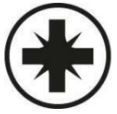
The abbreviation PZ stands for Pozidriv. This drive was patented in 1962. The Pozidriv screwdriver is an advancement of the Phillips screwdriver. Since the sides of the drive are parallel to each other, there is no force trying to push the tool out of the screw head. Only the center of the screwdriver has small grooves that taper downward. The position of the screw is easily recognized by the star on the screw head.
These drives are mainly used in the woodworking industry, the most well-known example being Spax screws. Screwdrivers or screws with the Pozidriv drive are marked with the letters PZ followed by a number indicating the size.
The most common sizes are PZ0, PZ1, PZ2, PZ3, PZ4, PZ5.
What Does PH Mean for Screwdrivers?

The abbreviation PH stands for Phillips in screws or screwdrivers. The Phillips screwdriver was patented in 1933 by JP Thompson. At that time, it replaced the slotted screw. The Phillips screwdriver is self-centering and can be driven in more easily and quickly because you no longer have to align the screwdriver as with slotted screws. Additionally, there is no longer a risk of the screw head slipping sideways.
The cross's end faces are not parallel but taper downward. This creates an axial force that pushes the crosshead away from the screw head. This effect is intended to allow the tool to easily exit the screw head and compensate for a misalignment between the tool and the screw.
The Phillips screwdriver is often confused with the Pozidriv screwdriver. The difference here is that the PH screwdriver does not have a star in its drive.
What Are Torx Screwdrivers?

The Torx drive is abbreviated as TX in practice. The Torx drive has the shape of a six-pointed star with rounded corners. The side surfaces are parallel to each other, so no forces act in the direction of the axis on the screw. During the screwing process, no pressure is required to push the tool out of the screw head.
Due to the rounded bars, there is no tooth effect in the profile. The clear advantage of Torx screwdrivers is that very high torques can be transmitted.
Screwdrivers and screws with the Torx drive are marked with the letters TX followed by a number corresponding to the size, e.g., TX5, TX10, T15 ...
Slotted Screwdrivers – The Classic
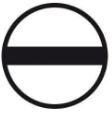
The slotted screwdriver has had a long existence. However, the slotted screwdriver is slowly dying out and has only a few areas of application left. The biggest disadvantage of the slotted screw is the low force transmission. The slotted screw does not have a predetermined symmetry, which means that the forces can only potentially be transmitted asymmetrically.
However, there are special forms that give it a justification again. Some screwdrivers, for example, have a striking cap that allows the screwdriver to function as a kind of chisel. An example here can be the Screwdriver Set 932/918/6 from Wera.