
What Do Safety Classes S1 to S5 Mean for Safety Shoes?
 06/12/2024
 10 min
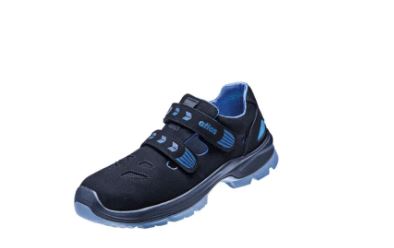
In professions where safety shoes are relevant, every employee or safety officer faces the question of which safety class should be used for the shoes. In practice, however, those involved are often unclear about how these safety classes differ.
Safety shoes are divided into safety classes, often also called protection classes. The base (SB) of a safety shoe is marked according to EN ISO 20345. This standard defines the minimum requirements for safety shoes. The properties of the shoe increase with higher classes.
The safety class S1 is the first class. It meets the basic requirements, and each subsequent class then has additional properties and thus meets additional requirements.
Safety Class S1
The safety class S1 is the first safety class. In this class, the shoe meets the minimum requirements. Additionally, the shoe has a closed heel area, antistatic properties, energy absorption in the heel area, and is fuel-resistant. The material of the shoe must demonstrate a certain tear strength and durability.
Shoes in this class have a closed heel area, which improves stability. The 360 safety sandal from the alu-tec series is a top seller among safety shoes in the S1 class.
Professions: Professional drivers, electricians, painters
The safety class S1P meets the same properties as the safety class S1, but these shoes also have penetration resistance.
Safety Class S2
This shoe meets the requirements of the S1 shoe and has additional requirements regarding water permeability and water penetration. However, this safety class does not have penetration resistance. The safety class S2 is particularly suitable for work in damp environments.
Professions: Metalworkers, concrete work, work with chemicals
Safety Class S3
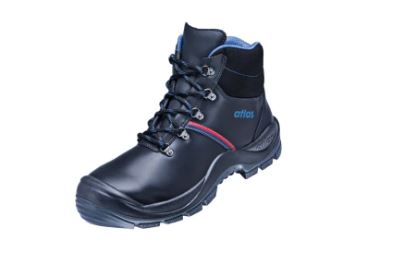
The S3 class is the highest class for shoes and thus meets the requirements of the S2 class. Additionally, it has a profiled sole that provides penetration resistance. Shoes of the safety class S3 are particularly suitable for work on construction sites or in warehouses where machines such as pallet trucks or forklifts are used.
The Anatomic Bau 500 safety shoe from Atlas is one of the most popular models in the S3 protection class.
Professions: Construction workers, craftsmen, maintenance, gardening
Safety Class S4 and S5
These classes refer to boots. However, they only meet the requirements of the S1 class. The S5 shoe cannot let water through in the first 15 minutes, has a profiled outsole, and has additional requirements for penetration resistance. The penetration resistance is missing in S4. Apart from that, the classes are identical in their properties.